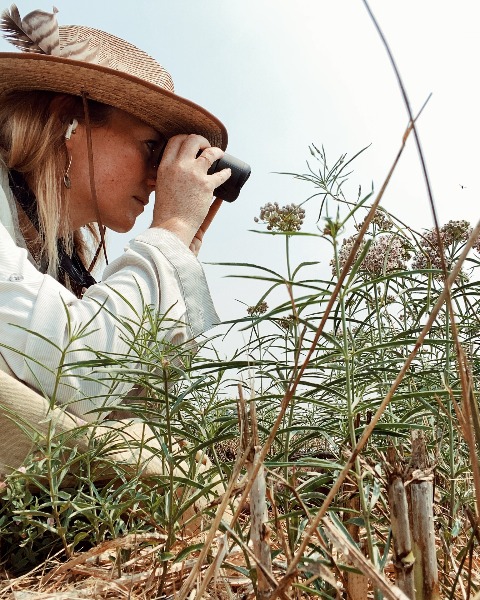
In an effort to restore ecosystem health to Yellowstone National Park and the surrounding areas, the grey wolf (Canis lupus) was re-introduced to Lamar valley in the mid-1990s. In the decades since this keystone species has engineered a trophic cascade of flora and fauna restoration. Animals such the North American beaver (Castor canadensis) and the grizzly bear (Ursus arctos horribilis) followed suit with an increase in population, resulting in a breach of the Yellowstone border. Ranchers and their livestock in the Greater Yellowstone Ecosystem were among the first to feel the effects, as they were raising prey that hadn’t interfaced with large predators in nearly 100 years. A family ranching in Montana’s Centennial Valley and Tom Miner Basin has modified their stockmanship practices in response to the reintroduction of wolves and bears. To understand how the modification of livestock management for coexistence affects bee habitat we have used passive and active trapping methods to inventory the local bee communities on three ranches managed by the family which border Yellowstone. We have also designated vegetation monitoring transects throughout these ranches. The study was replicated on four other ranches in the Greater Yellowstone Ecosystem, further from the park, which have not found it necessary to modify their management for predator coexistence. Our results suggest the management practices of the family bordering the park have created ample habitat for a diversity of bees, including the imperiled Western bumble bee (Bombus occidentalis) and golden northern bumble bee (Bombus fervidus).
.png)