.png)




Section Symposium
Systematics, Evolution, and Biodiversity
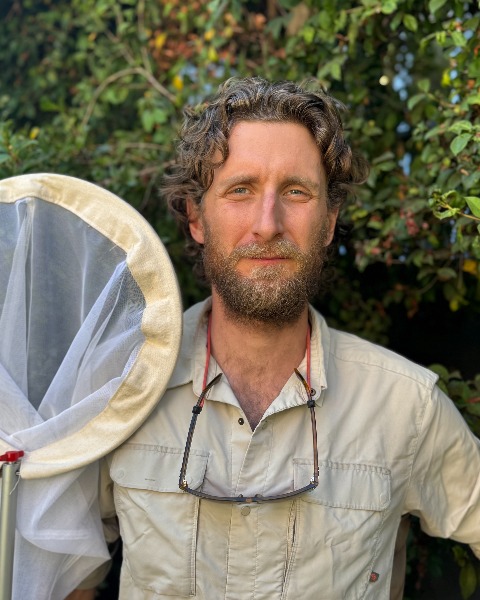
Zachary G. MacDonald (he/him/his)
Assistant Professor of Conservation Genomics and Biodiversity
University of California
Redlands, California
Integrating whole-genome sequencing with ecological modeling and morphological analyses offers unprecedented power to resolve cryptic diversity and guide conservation of insects. Here I use damselflies as an example. Across North America’s dryland ecosystems, the accelerating loss and degradation of lotic habitat threatens many freshwater insects. The American rubyspot damselfly (Hetaerina americana) complex is among the most studied odonates, yet even basic questions, including how many species it comprises and what their conservation status is, remain unresolved. Using a new reference genome for the complex and whole-genome resequencing of ~150 individuals, we uncovered three deeply divergent lineages in California (FST = 0.544–0.625). Two appear largely endemic to California, while a third clusters with H. americana sensu stricto elsewhere in the US. Comparative species distribution models revealed significant niche divergence among lineages, and morphological analyses further support their adaptive distinctiveness. Both newly discovered lineages show extremely reduced genetic diversity relative to H. americana sensu stricto, and evidence of accelerating extirpations in southwestern California further raises conservation concern. Landscape genomic analyses show that genomic variation within each lineage is structured by isolation by distance and resistance (based on habitat connectivity), but not divergent adaptation to different environments. A novel approach revealed that individual heterozygosity in southwestern California is positively correlated with habitat suitability across broad spatial scales (~6–18 km). Collectively, these findings challenge a dominant view that damselfly diversification is largely non-ecological and emphasize that conserving both habitat suitability and connectivity is important for maintaining genomic diversity.