.png)




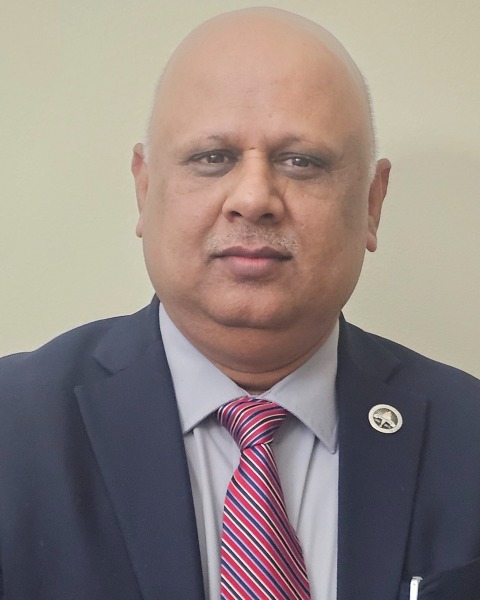
Muhammad Haseeb (he/him/his)
Associate Professor of Entomology/Center Director
Florida Agricultural and Mechanical University
Tallahassee, Florida
Distinguished colleagues, researchers, students, and stakeholders, as we conclude this symposium, we reflect on an inspiring exchange of ideas, innovations, and collaborations that reaffirm the vital role of beneficial insects in shaping resilient agricultural ecosystems. Today’s discussions have highlighted how innovations in Integrated Pest Management ranging from habitat diversification and refuge crops to precision monitoring, biological control, and AI-driven decision tools—are transforming the way we protect both crops and their natural allies.
We have learned that protecting beneficial insects is not only an ecological priority but also an economic and ethical commitment to sustainable food production. The integration of refuge crops such as sweet alyssum, marigold, buckwheat, and sunflower demonstrates that simple, science-based interventions can yield profound impacts on pest suppression, pollination, and ecosystem balance. These innovations reinforce that IPM is not static—it evolves through technology, local adaptation, and community engagement.
As we move forward, let us continue fostering partnerships among universities, growers, extension agents, and policymakers to strengthen biological control and reduce dependency on chemical inputs. Together, we can build agroecosystems that are productive, profitable, and environmentally sound systems that sustain both people and the beneficial organisms upon which our future depends.
On behalf of the organizing committee, thank you for your active participation, insightful contributions, and shared commitment to advancing sustainable pest management. May the connections formed here today continue to drive innovation, collaboration, and stewardship across our agricultural landscapes.