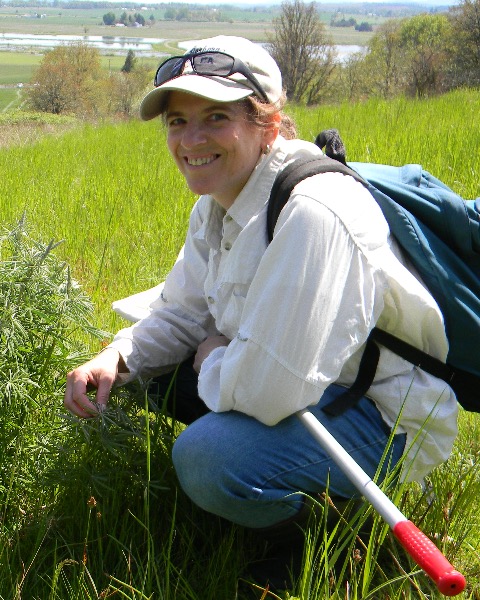
Professor Washington State University Vancouver, Washington
Successfully managing habitat can mean the difference between life and death for many rare and at-risk butterfly species that occupy disturbance- reliant habitats. This includes the Oregon silverspot butterfly, Speyeria = Argynnis zerene hippolyta, which is a federally threatened species that requires frequent disturbance to maintain the quality of early successional habitat needed for butterfly larval survival, vegetation resource availability, and adult reproductive behaviors. Despite the need for disturbance, it is largely unknown how habitat management can be used as a tool to support Oregon silverspot butterfly population viability. In response to this knowledge gap, we designed experimental research at two sites on the Oregon coast to investigate the degree to which the introduction and intensity of habitat management practices affected Oregon silverspot butterfly larval survival, their associated vegetation resources, and adult behaviors. We learned that some management practices, especially those which substantially reduced cover of competing vegetation, increased larval survival. In addition, given sufficient density of violet hostplant, it was more important to reduce overall vegetation structure than to increase violet density. These findings will have direct implications for management decisions and overall Oregon silverspot butterfly conservation strategies.
.png)