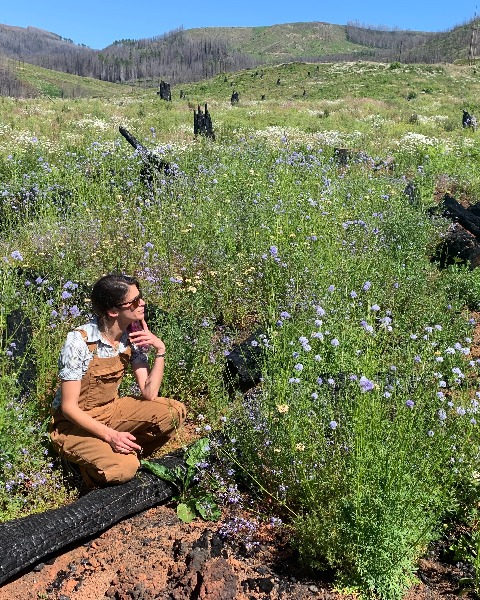
Restoration is thought to have the potential to support pollinators after wildfire and timber harvest, yet its benefits for bee communities are not well quantified. Therefore, we investigated how targeted floral enhancements---native wildflower seedings planted into burned slash piles---influence native Bombus communities in recently burned and harvested forests within private, managed forest landscapes of the western Cascades, Oregon. Using paired enhanced and nearby unenhanced stands repeatedly sampled across years since restoration, we quantified changes in bee abundance and diversity. We also evaluated how stand‐scale context (surrounding high‐severity fire and baseline floral availability) influences these responses, separating within‐stand floral enhancement effects from broader landscape constraints. We also screened for common infectious parasites (Crithidia, Varimorpha, Apicystis) to determine whether floral enhancements affected bee health by affecting the floral and bee communities. Together, these analyses will clarify when and where floral enhancements most effectively help rebuild native bumble bee communities in post-fire, managed forests.
.png)